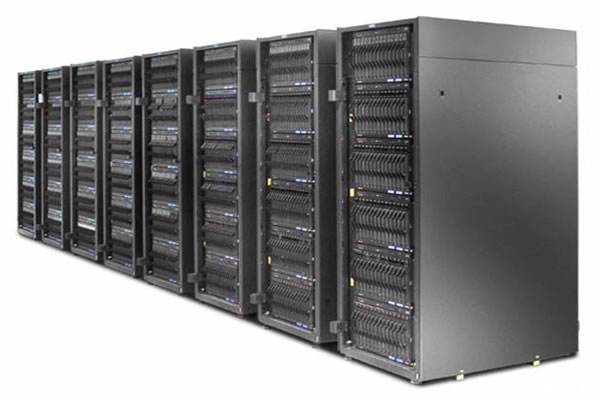
introduction: evaluation purpose and scope
this article aims to compare and evaluate the u.s. server site group rental experience and cost-effectiveness of multiple vendors through unified testing methods, covering key dimensions such as network latency, bandwidth stability, availability, deployment convenience, ip diversity, and compliance support, and provide reference selection basis and practical suggestions for users who need to build a website or a site group in the united states.
evaluation methods and main indicators
the evaluation uses a combination of actual business load simulation and continuous monitoring. the indicators include average delay, packet loss rate, bandwidth peak and stability, sla and actual availability, control panel and api ease of use, ip resource type and management, after-sales response time, etc. all tests are conducted in parallel in the same time window and with similar configurations to ensure fairness and consistency in comparison.
network and bandwidth experience assessment
network experience is the core of station group leasing, including backbone bandwidth quality, latency to major target markets, packet loss control, and uplink and downlink symmetry. excellent suppliers are characterized by stable international exports, good peering interconnection with multiple operators, and reasonable bandwidth burst handling; disadvantages are often caused by periodic congestion or unstable return routing, which affects the capture and distribution efficiency.
stability and usability experience
the stability evaluation focuses on online persistence and fault recovery mechanisms, focusing on observing sla commitment and actual achievement rates, computer room redundancy strategies, hardware replacement and snapshot recovery speed. for a site group, node stability is directly related to inclusion and access rate. high availability design and transparent fault reporting mechanism are given priority when selecting.
deployment, management and operation and maintenance convenience
the deployment experience involves control panels, apis, automated templates, and image support, while management involves monitoring alarms, log exports, and role permissions. for site group operators, rapid batch site uploading, batch reinstallation and automated script support can significantly reduce operation and maintenance costs. the supplier's tool chain perfection in this regard affects long-term efficiency.
ip resources and site group compliance considerations
when using a site group, attention should be paid to ip diversity, independence, and the abuse complaint process. at the compliance level, the supplier's control policies and legal response to spam and malicious traffic should be evaluated. prefer suppliers that support multi-line, multi-asn ip pools and transparent abuse management mechanisms, which is conducive to long-term operations and risk control.
billing model and cost-benefit analysis
the common billing models are based on traffic, bandwidth, instance or hour. cost-effectiveness not only depends on unit price, but also comprehensive bandwidth peak processing, free snapshots or backups, ingress and egress traffic policies, and discount strategies. it is recommended to choose flexible billing based on the site group size and access fluctuations to avoid uncontrollable charges during peak periods.
cost-effectiveness ranking list (categorized by user needs)
based on the above dimensions, suppliers can be divided into several categories: comprehensive (balancing performance and services, suitable for most site groups), high-performance (prioritizing network and computing, suitable for high-concurrency crawling), cost-effective (focusing on basic functions and low threshold), and compliance-first (emphasizing ip quality and compliance support). when choosing, just choose the best based on your own needs.
summary and selection suggestions
to sum up, when purchasing a us server farm, you should be guided by business needs. you should first clarify the traffic patterns and compliance requirements, and then evaluate the network quality, stability, management convenience and billing transparency. it is recommended to conduct small-scale trials and stress tests first to confirm the supplier's performance and after-sales response in real scenarios, and finally make long-term deployment decisions based on cost performance and scalability.
- Latest articles
- Common Troubleshooting Steps And Rapid Recovery Solutions For Taiwan Telecom CN2 Broadband
- An Automated Operations And Maintenance Solution Covering Everything From Development To Monitoring How To Build A Site On Hong Kong Cloud Servers
- From A Business Perspective, Is Vietnam's VPS Reliable? Considerations Regarding Compliance And Data Security
- Free Server Korea Security Protection Policy And Backup Implementation Guide
- Cost And Operation Management Recommendations For Enterprises Deploying Korean CN2 Site Cluster Cloud Servers
- Basic Information On Taiwan Proxy Servers, Common Terminology Explanations, And Purchase Precautions
- How To Choose A Cloud Server In Thailand: From Network Latency To After-sales Service, Comprehensive Aspects
- Recommended Recommendations For Operators To Improve Thailand's High-Defense VPS Protection And Bandwidth Stability By Comparison
- Optimized Storage Costs For Hong Kong Hosted Servers, Hard Disk Servers, Layered Storage, And Cold Archiving Solutions
- Are Tencent Cloud Korean Servers Native? Recommendations For Local Service Provider Integration And Latency Optimization
- Popular tags
-
How Enterprises Can Securely Configure US NTP Server Addresses And Ports To Ensure Clock Consistency
Guide for Businesses: How to securely configure U.S. NTP server addresses and ports (UDP 123) using firewalls, authentication, and an internal hierarchical architecture to ensure device clock consistency and compliance. -

-
Bandwidth Quality Analysis Of The Advantages Of High-security US CN2 Servers In Cross-border Access
This article analyzes the bandwidth quality and high protection advantages of US CN2 servers in cross-border access scenarios, covering latency, packet loss, routing optimization, and monitoring recommendations to assist in selection and deployment decisions.